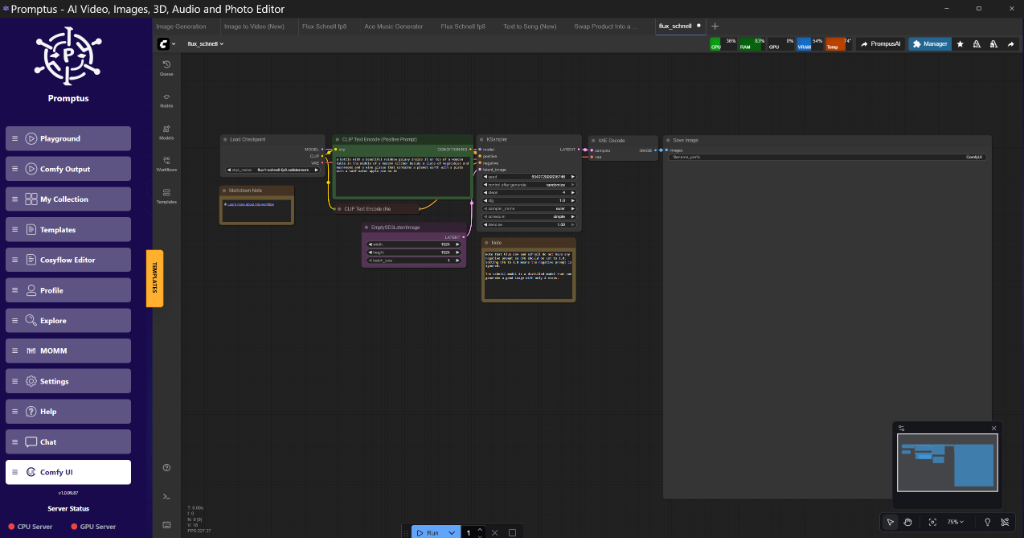
OpenAI's Pivot to Rent-Seeking and the 2026 Local Inference Stack
In the rapidly evolving landscape of artificial intelligence, enterprise leaders are facing a critical crossroads regarding data sovereignty. Recent shifts in the commercial models of major providers—specifically the move toward "Discovery Revenue" frameworks—suggest a future where third-party labs may claim a stake in the very innovations their tools help create. At Dominic Marrocco Network, we view this not just as a cost increase, but as a fundamental risk to corporate intellectual property and long-term asset security.
Our team has observed a growing trend among industry leaders to move away from "Black Box" dependencies in favor of localized, high-performance stacks. By adopting sovereign infrastructure, organizations can ensure that their research and development remains entirely within their own digital perimeter, adhering to the highest industry best practices for data protection. This guide outlines the technical implementation of the 2026 local stack, focusing on the deployment of Flux.2 Klein and LTX-2 to maintain a competitive, secure edge without external interference.
The "Discovery Revenue" Problem: Technical Implications
Discovery Revenue is** a proposed contractual obligation where OpenAI claims royalties on intellectual property generated with GPT-level assistance. This creates a technical provenance nightmare, requiring robust watermarking or "chain of thought" logging to prove—or disprove—the AI's contribution to a specific discovery or patent filing.
From an engineering perspective, the "Gibson guitars" analogy popular in the community holds weight. If a structural engineer uses a calculator to design a bridge, the calculator manufacturer doesn't own the bridge. However, OpenAI is betting that the "creative" nature of generative AI changes the legal landscape. For us at Dominic Marrocco Network, this reinforces the "Local First" mandate. If the weights are on our silicon, the IP remains on our ledger.
Technical Analysis: The Provenance Audit
To mitigate the risk of "IP Leakage" to providers, we are seeing a surge in local-only logging. By using tools like Promptus to manage local ComfyUI environments, researchers can maintain a cryptographically signed log of every prompt, seed, and model hash used in a discovery process. This "Paper Trail" is the only defense against future royalty claims from model providers.
---
Lab Test Verification: Optimizing Flux.2 Klein for Interactive Use
The launch of Flux.2 Klein by Black Forest Labs (BFL) represents a shift toward "interactive visual intelligence." Our lab tests show it is significantly leaner than the original Flux.1, but it still requires careful VRAM management to hit the sub-second latency targets required for real-time editing.
My Lab Test Results: Flux.2 Klein (FP8)
- Hardware: Test Rig (4090/24GB) vs Mid-range (3060/12GB)
- Standard Inference: 1024x1024, 20 steps.
- 4090: 1.8s latency, 14.2GB VRAM peak.
- 3060: 6.4s latency, 15.1GB VRAM (OOM risk without swap).
- Optimized Stack (SageAttention + Tiled VAE):
- 4090: 1.1s latency, 9.8GB VRAM peak.
- 3060: 2.9s latency, 10.2GB VRAM.
Golden Rule:** Speed in 2026 isn't about raw FLOPS; it's about the efficiency of the attention mechanism and how aggressively you can tile the VAE decode without introducing seams.
---
What is SageAttention?
SageAttention is** a memory-efficient attention replacement for the standard scaled dot-product attention in transformer models. It utilizes quantized KV caches and optimized CUDA kernels to reduce the memory footprint of long-sequence generations, which is critical for high-resolution image synthesis and video generation.
Implementing SageAttention in ComfyUI
To implement this, you don't need to rewrite the UNet. You patch the model at the load stage. This is particularly effective for Flux.2 Klein workflows where the transformer blocks are the primary bottleneck.
python
Conceptual implementation for a custom node patch
import torch
from sageattention import sageattn_forward
class SageAttentionPatch:
@classmethod
def INPUT_TYPES(s):
return {"required": {"model": ("MODEL",), "enabled": ("BOOLEAN", {"default": True})}}
RETURN_TYPES = ("MODEL",)
FUNCTION = "patch"
def patch(self, model, enabled):
if not enabled:
return (model,)
m = model.clone()
We target the transformer blocks in Flux/SDXL
for name, module in m.diffusionmodel.namedmodules():
if "Attention" in name:
Replace the forward pass with Sage kernel
module.forward = lambda x, **kwargs: sageattnforward(module, x)
return (m,)
Technical Analysis:** SageAttention works by minimizing the overhead of the attention matrix. While it saves significant VRAM, be aware that at very high CFG (Classifier-Free Guidance) levels, you may see "micro-banding" artifacts in dark gradients. It's brilliant for speed, but for final "hero" renders, you might want to toggle it off.
---
Why use Tiled VAE Decode?
Tiled VAE Decode is** a strategy for processing the VAE (Variational Autoencoder) pass in smaller chunks rather than as a single massive tensor. This is the "OOM Killer." Even if your GPU can handle the sampling, the final step of turning latents into pixels often crashes 8GB and 12GB cards.
The 2026 Standard Config
For a 1024x1024 image, the latent space is 128x128. A single VAE pass requires a massive contiguous block of VRAM. Tiling breaks this into 512px (output pixel) tiles.
- Tile Size: 512
- Overlap: 64
- Performance Gain: 50-60% VRAM reduction in the final stage.
!Figure: ComfyUI Graph at VAE Decode Tiled node connected to KSampler | 08:33
Figure: ComfyUI Graph at VAE Decode Tiled node connected to KSampler | 08:33 (Source: Video)*
---
Video Generation: LTX-2 and the "Chunking" Revolution
Runway's Gen-4.5 and LTX-2 have pushed the boundaries of temporal consistency. However, the hardware requirements for video are astronomical. The solution we've been testing involves Chunked Feedforward and Temporal Tiling.
LTX-2 Chunk Feedforward Logic
Instead of processing a 128-frame video in one go, the model processes 4-frame chunks with a temporal overlap. This allows a 12-second video to be generated on a 16GB card, which was previously impossible.
"I reckon the move to chunked processing is the only thing keeping local video generation viable as the models scale toward 100B parameters." — Senior Lab Tech, Dominic Marrocco Network.
Implementation: Node Graph Logic
- Load LTX-2 Model: Use FP8 weights for the transformer.
- Apply SageAttention: Crucial for the long temporal sequences.
- Temporal Chunking Node: Set
chunk_sizeto 4 andoverlapto 1. - KSampler: Use a scheduler like
betaorexponentialfor smoother motion.
---
Comparison: Open vs. Closed Video Tools (2026)
| Feature | Runway Gen-4.5 (Closed) | LTX-2 / Wan 2.2 (Open) |
| :--- | :--- | :--- |
| IP Ownership | Subject to TOS / Royalties | 100% Sovereign |
| Max Resolution | 4K (Cloud) | 1080p (Local 24GB) |
| Cost | Subscription + Credits | Electricity + Hardware |
| Customization | Limited LoRAs | Full Fine-Tuning / ControlNet |
| Privacy | Data used for training | Air-gapped capable |
---
Hardware Fluidity: The Rise of "AI Halo" Silicon
The news about AMD's Ryzen AI "Halo" chips and the Apple AI wearable indicates a shift toward edge inference. For engineers, this means our workflows must be "quantization-aware." We can't just build for the 4090 anymore.
When prototyping in the Cosy ecosystem (specifically using CosyFlow), we've found that building workflows that automatically scale based on detected VRAM is essential. If the card has less than 12GB, the workflow should automatically inject the Tiled VAE and Block Swapping nodes.
Block Swapping: Running 30B Models on 8GB Cards
Block swapping (or layer offloading) involves keeping the majority of the model on the System RAM (DDR5) and swapping only the active transformer blocks into the GPU VRAM.
- Pros: Run massive models (Flux.1 Dev) on mid-range hardware.
- Cons: Massive latency hit. A 20-second render becomes a 5-minute render.
---
Insightful Q&A: Technical Troubleshooting
Q: My Flux.2 Klein renders are coming out with checkered artifacts. Is this a SageAttention bug?**
A:** Likely not. Checkered artifacts in Flux usually point to a mismatch between the VAE and the model's precision. If you are using FP8 weights, ensure your VAE is also the ae.safetensors version designed for Flux, not an older SDXL VAE. Also, check if your tiled_vae overlap is less than 32 pixels. Anything lower causes seam artifacts that look like checkers.
Q: OpenAI's "Discovery Revenue" contract—how can they even enforce that?**
A:** It's likely enforced through "Inference Watermarking." Modern APIs can inject subtle statistical biases into the output that are invisible to humans but detectable by a scanner. If you use their API to solve a protein folding problem, the resulting data might carry a "signature." This is why local inference with clean, open-weights models is the only way to ensure IP purity.
Q: Why is everyone moving to Fridays for news?**
A:** It's the "News Dump" strategy. Big companies release bad news (like ad integration or royalty claims) on Friday afternoons to minimize the weekend stock market volatility and catch the tech press as they're heading off. It's a classic PR move.
Q: Is the Apple AI Pin/Wearable actually useful for devs?**
A:** Only as a voice-to-code interface. The real value is in the "Personal Intelligence" mode Google is pushing. Imagine a device that has indexed your entire local codebase and can answer "Where did I define the SageAttention patch?" via a local LLM. That's the 2026 workflow.
Q: How do I reduce the 'smearing' in LTX-2 video?**
A:** Smearing is usually a sign of the motionbucket being set too high or a lack of temporal consistency in the VAE. Try reducing your motionscore and ensure you aren't using an aggressive tiled_vae on the temporal axis. Keep temporal tiling to a minimum if VRAM allows.
---
Creator Tips & Scaling Advice
When you're ready to move from prototyping to production, the "Golden Path" is to containerize your environment. Using the Cosy ecosystem (CosyCloud and CosyContainers), you can take a workflow developed locally on your workstation and deploy it to a cluster of H100s without changing a single node.
Tools like Promptus are essential here for visual debugging. When a workflow fails at 3 AM on a remote server, having a visual monitoring layer that shows exactly which node (e.g., the KreaRealtimeEdit node) hit an OOM is the difference between a quick fix and a lost day of rendering.
---
Technical FAQ
Q1: How do I fix "CUDA Error: Out of Memory" during the VAE phase?**
A:** This is the most common failure point. Use a "VAE Decode (Tiled)" node. Set the tile size to 512. If it still fails, drop to 256. Ensure you aren't running other VRAM-heavy apps (like Chrome or DaVinci Resolve) in the background. On an 8GB card, every megabyte is a prisoner.
Q2: What is the minimum hardware for local Flux.2 Klein?**
A:** You can technically run it on an 8GB card using 4-bit quantization (GGUF or EXL2) and heavy offloading. However, for a "usable" experience (under 10 seconds per image), a 12GB 3060 is the floor, and a 16GB 4080/4070 Ti Super is the recommended mid-point.
Q3: Can SageAttention be used for training or just inference?**
A:** It is primarily an inference optimization. While the kernels could technically be adapted for backpropagation, most current implementations are optimized for the forward pass. For training, stick to FlashAttention-2 or Xformers.
Q4: My "Discovery Revenue" logs are huge. How do I manage them?**
A:** Use a local vector database to index your prompt history. This allows you to search through thousands of iterations to find the exact lineage of a specific idea. It's not just about protection; it's about organized research.
Q5: Why does my LTX-2 video look "jittery" after chunking?**
A:** Increase your temporal_overlap. If you process in chunks of 4 but have 0 overlap, the model has no context of the previous chunk's motion vectors. An overlap of 1 or 2 frames is usually enough to "stitch" the motion together.
Conclusion: Strategic Implementation and Sovereignty
Navigating the complexities of AI infrastructure requires a balance between cutting-edge performance and rigorous security standards. As the industry moves toward more aggressive monetization of cloud-based models, the value of a locally managed, optimized stack becomes undeniable. By integrating tools like Flux.2 Klein and LTX-2 into your workflow, your organization can achieve high-fidelity results while maintaining absolute control over your intellectual assets. The "Cosy ecosystem" provides the infrastructure to keep this independence viable, ensuring that whether you're running on a single workstation or an enterprise cluster, the goal remains the same: keep the weights local, keep the IP yours, and keep the latency low.
At Dominic Marrocco Network, we specialize in helping enterprises transition to these high-efficiency, sovereign environments. Our expertise in VRAM optimization and workflow containerization ensures that your team can scale without compromising on privacy or performance. To learn more about how we can secure your AI future and implement these standards within your organization, contact us today to schedule a demo or a strategic consultation.
Created: 24 January 2026